Feeds:
Posts
Comments

Archive for the ‘Uncategorized’ Category

Update: We are pleased to welcome Cody Watson as our new Admin Coordinator!

After nine years, our Administrative Coordinator Rhonda is moving on. Could you be our next admin person? Here’s the job description:

“The Texas Coastal Watershed Program, a unit of Texas Sea Grant and Texas A&M AgriLife Extension, Texas A&M University, in Clear Lake City (Houston), Texas, seeks a highly motivated and dynamic administrative assistant. The TCWP seeks a team player who is excited about supporting and being part of one of the most dynamic environmental outreach organizations in the State. The incumbent of this position will have a strong service orientation and an inbuilt focus on detail. High school diploma required, bachelor’s degree preferred. Experience with non-profits and grant management a real plus. High level of proficiency with standard office software required. Experience with account management preferred. Skills test will be required. Minimum 3 years experience. 3/4 time position.   Send resume to jjacob@tamu.edu.”

Read Full Post »

Green roofs are popping up all around the country.  The benefits of these roof top gardens are widely recognized: turning an impervious surface into a pervious one; reducing energy costs; improving air quality; reducing the urban heat island effect; the list goes on.  Despite the need for additional engineering work and sometimes added upfront building costs, this best management practice is really catching on.  Cities like Chicago have hundreds of green roofs, and even small communities like Webster and Friendswood Texas can brag about a green roof in their town.

As the idea of roof top gardens spreads, new ideas continue to pop up.  One of the coolest in my opinion is making the roof top into an actual garden; an edible garden; growing food on your roof.

All of the folks that I can find who have created roof top vegetable gardens are using commercial spaces or multi-family dwellings.  Mostly because they are larger, typically have flat roofs and more accessible.  They also offer opportunities for gardening in urban areas where real estate is at a premium and on the ground space is difficult to come by, it’s the idea of growing up, not out, applied to gardens.

Click on the photos below to check out some  projects where roofs are producing food and improving water quality, not just keeping us warm and dry.

  HigherGroundFarm Higher Ground Farm boasts of being Boston’s first rooftop farm

BRITrooftopCactus

The Botanical Research Institute of Texas has a more traditional green roof but harvested prickly pear fruit to make jelly

EagleStreetRooftopFarm

Eagle Street Rooftop Farm in Brooklyn

RoyalYorkRooftopGarden

Royal York Hotel Rooftop Garden in Toronto has taken the local food movement to heart

Read Full Post »

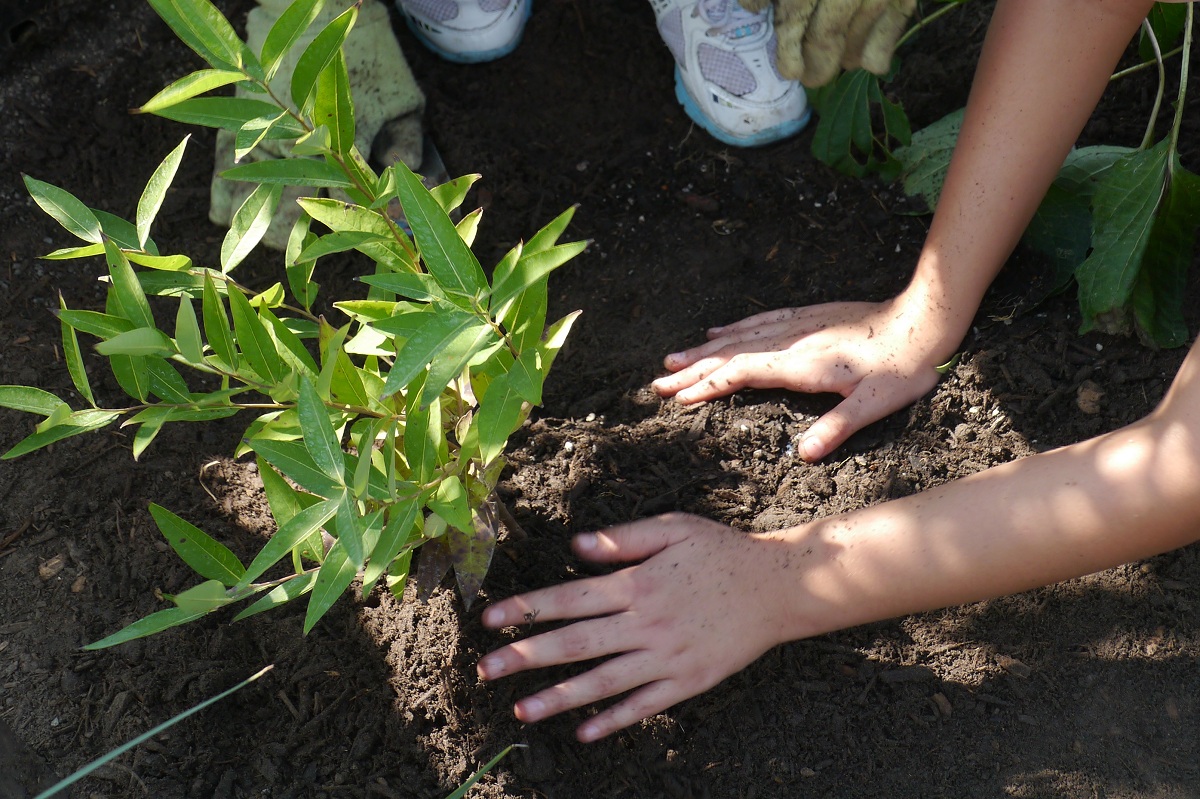
Girl Scouts plant a rain gardenGirl Scouts plant a rain garden

Recently, I have had the opportunity to work on several garden projects with some pretty amazing kids. Let me rephrase that. All kids are amazing and always end up teaching me far more than I try to teach them. But how often do we assume children are not strong enough, lack energy, courage or resolve?

So much of what kids do and think is egocentric—how can this thing or action benefit me, and only me, now? Adults help feed this attitude when they dismiss a child’s ability to perform even the simplest of tasks. Or when they do not allow room for critical thinking and problem solving by spoon feeding children the answers. A child might hear, “When you grow up you can do…..” But children of every age deserve the chance to prove their abilities in practical, real accomplishments.

(more…)

Read Full Post »

Image

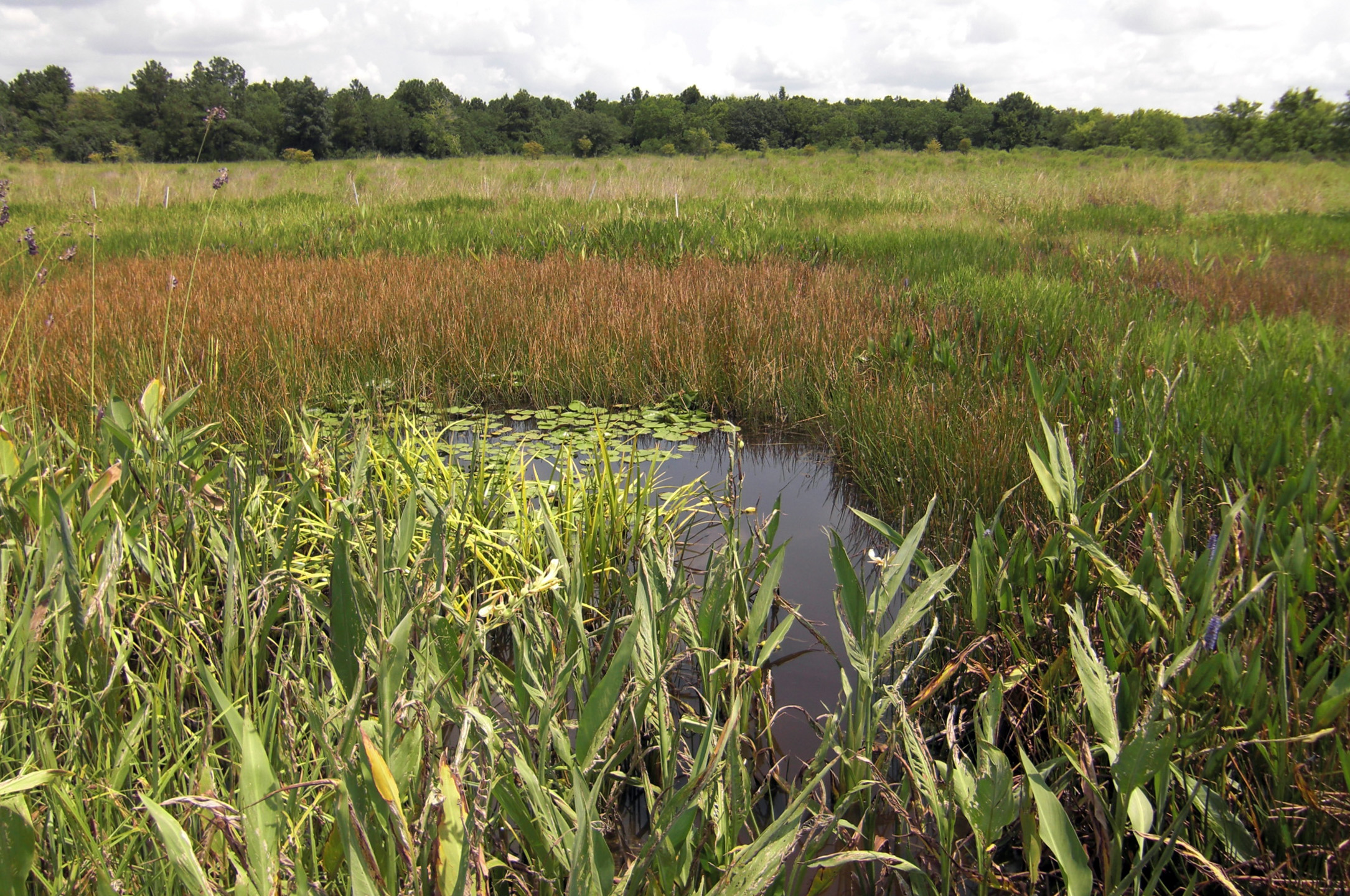
Recently I have seen multiple articles on various wetland restoration projects from California to Florida and the consistent (and obvious) theme: return the land to the wetland habitat  that once existed.  Those stories just lend credibility to our wetland restoration project at Sheldon Lake State Park.  The restoration of the 136 acres of prairie wetlands to date, and the upcoming additional 52 acres, reflects a true (as true can be) restoration–taking the landscape back to what it once was—wide-open coastal prairie and pine/oak savanna dotted and crossed by circular and linear marsh basins.   

As we look forward to Phase 4 of the restoration, its amazing to look at the pictures from Phase 1 and see that what we attempted to do with our restoration model, and indeed, how well it established and flourished.  Phase 1 was the beginning of the whole restoration process and we weren’t sure all we planned would work out–would the excavations be right? would the soils support the plant community? would the plantings take?  By the end of Phase 2 and 3, we felt that our model was solid and the progression below offers the visual testimony (picture of Pond 2, Phase 1)

Image

Phase 4 will take us into somewhat new territory but the principles of the model will remain the same. Investigate the landscape to uncover the past and precisely restore the wetlands were they once thrived and follow by restoring the native plant community by the hands of invested volunteers.  (Follow our efforts on the Wetland Team blog)

Image  Image


Read Full Post »

rain garden in League City

rain garden in League City

It is doubtful that anyone driving or walking past a detention pond with its typical chainlink fence perimeter has stopped to admire it. Surrounding one with shrubs and trees and adding a fountain in the center does little to increase appeal. Detention ponds are required by developers when natural systems such as native prairies, wetlands, and woodlands are paved over to build roads, homes, parking lots and malls. They were designed as an attempt to make up for the natural porous, or permeable, areas lost to development.  Nonetheless, rainwater, also referred to as stormwater, which once soaked into the soil and helped to replenish groundwater, rapidly runs off the solid, impervious surfaces. Along the way it picks up substances such as pesticides and synthetic fertilizers from landscapes, oil and grease from parking lots and pet waste. As a result, we see flooding, polluting of rivers, bayous and bays, and lowering of water levels in aquifers. (more…)

Read Full Post »

« Newer Posts - Older Posts »