Feeds:
Posts
Comments

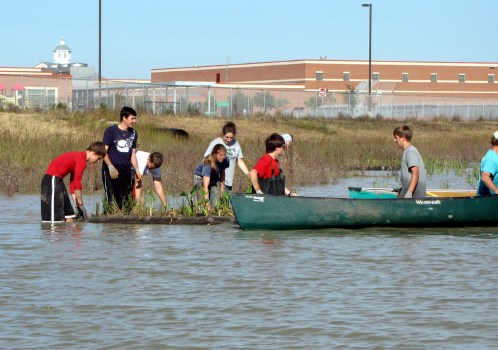
smFloating Wetlands-HBrown (40)
Students and volunteers launch a floating wetland island into the stormwater detention basin. Photo: Helle Brown

Our first installation of floating wetland islands went into the campus stormwater detention pond at Clear Creek Independent School District’s Education Village in League City. TCWP and the school community launched three islands on November 10

When 72 volunteers, 2 camera crews, and the school superintendent show up to help us undertake something new, it sure is wonderful when it is accomplished with hardly a hitch!
Continue Reading »

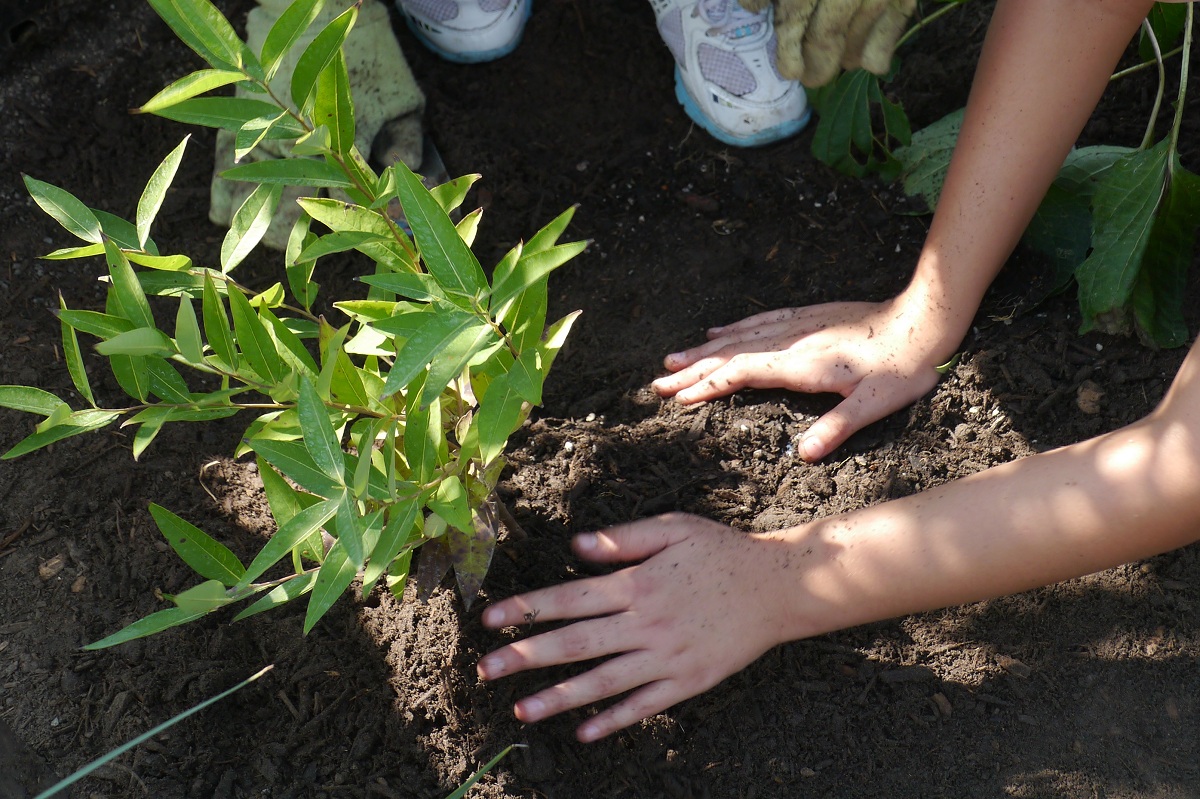
Girl Scouts plant a rain gardenGirl Scouts plant a rain garden

Recently, I have had the opportunity to work on several garden projects with some pretty amazing kids. Let me rephrase that. All kids are amazing and always end up teaching me far more than I try to teach them. But how often do we assume children are not strong enough, lack energy, courage or resolve?

So much of what kids do and think is egocentric—how can this thing or action benefit me, and only me, now? Adults help feed this attitude when they dismiss a child’s ability to perform even the simplest of tasks. Or when they do not allow room for critical thinking and problem solving by spoon feeding children the answers. A child might hear, “When you grow up you can do…..” But children of every age deserve the chance to prove their abilities in practical, real accomplishments.

Continue Reading »

We are working with the City of League City on a very exciting and ground breaking project, the Ghiardi WaterSmart Park.  This Park is currently under construction on Louisiana Avenue in League City, Galveston County, Texas. Scheduled for completion next month, this space is much more than just a park.  The 3.75 acre neighborhood space has a pavilion, walking trails and a playground.  It also has special features including rain gardens, a cistern to collect rain water for irrigation, a green roof on the pavilion and WaterSmart landscapes.  The park is also home to the 100+ year old Ghirardi Oak tree that was relocated during the reconstruction of Louisiana Avenue in 2012.

P1010092 - CopyCrew moving the 100+ year old Ghirardi oak tree.

The Ghirardi WaterSmart Park design is based on the three principles of WaterSmart Landscapes: water conservation, water quality and habitat for wildlife.  These three elements are integrated with typical park features to create a unique and water conserving park. Continue Reading »

Image

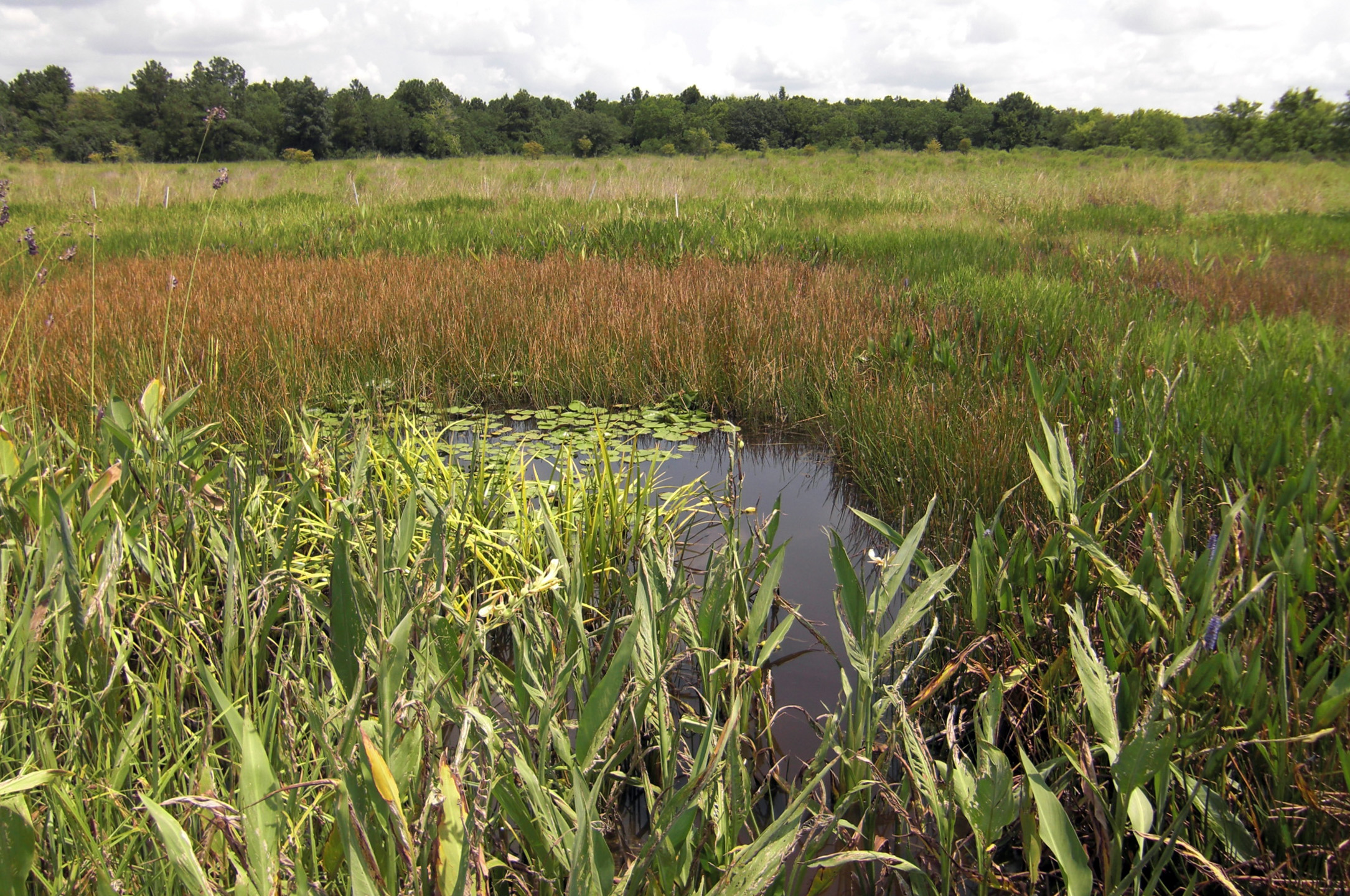
Recently I have seen multiple articles on various wetland restoration projects from California to Florida and the consistent (and obvious) theme: return the land to the wetland habitat  that once existed.  Those stories just lend credibility to our wetland restoration project at Sheldon Lake State Park.  The restoration of the 136 acres of prairie wetlands to date, and the upcoming additional 52 acres, reflects a true (as true can be) restoration–taking the landscape back to what it once was—wide-open coastal prairie and pine/oak savanna dotted and crossed by circular and linear marsh basins.   

As we look forward to Phase 4 of the restoration, its amazing to look at the pictures from Phase 1 and see that what we attempted to do with our restoration model, and indeed, how well it established and flourished.  Phase 1 was the beginning of the whole restoration process and we weren’t sure all we planned would work out–would the excavations be right? would the soils support the plant community? would the plantings take?  By the end of Phase 2 and 3, we felt that our model was solid and the progression below offers the visual testimony (picture of Pond 2, Phase 1)

Image

Phase 4 will take us into somewhat new territory but the principles of the model will remain the same. Investigate the landscape to uncover the past and precisely restore the wetlands were they once thrived and follow by restoring the native plant community by the hands of invested volunteers.  (Follow our efforts on the Wetland Team blog)

Image  Image


rain garden in League City

rain garden in League City

It is doubtful that anyone driving or walking past a detention pond with its typical chainlink fence perimeter has stopped to admire it. Surrounding one with shrubs and trees and adding a fountain in the center does little to increase appeal. Detention ponds are required by developers when natural systems such as native prairies, wetlands, and woodlands are paved over to build roads, homes, parking lots and malls. They were designed as an attempt to make up for the natural porous, or permeable, areas lost to development.  Nonetheless, rainwater, also referred to as stormwater, which once soaked into the soil and helped to replenish groundwater, rapidly runs off the solid, impervious surfaces. Along the way it picks up substances such as pesticides and synthetic fertilizers from landscapes, oil and grease from parking lots and pet waste. As a result, we see flooding, polluting of rivers, bayous and bays, and lowering of water levels in aquifers. Continue Reading »